
AI needs to have ‘reasonable guidelines,’ Palantir’s Karp tells Gammatek Ispl

Author: Gammatek ISPL, Published: Sep 2026
In this article
What Karp actually said, and what it doesn't quite match
Why liability-first regulation changes the game differently than checklist-style compliance
Liability-first vs. checklist compliance vs. self-policing, compared
Why your enterprise risk management software needs an AI liability module now
Where the real exposure sits: the data and storage layer beneath your AI
What this looks like when a company actually runs the audit
Implementation considerations for updating your ERM system this quarter
FAQ
What Karp actually said, and what it doesn't quite match
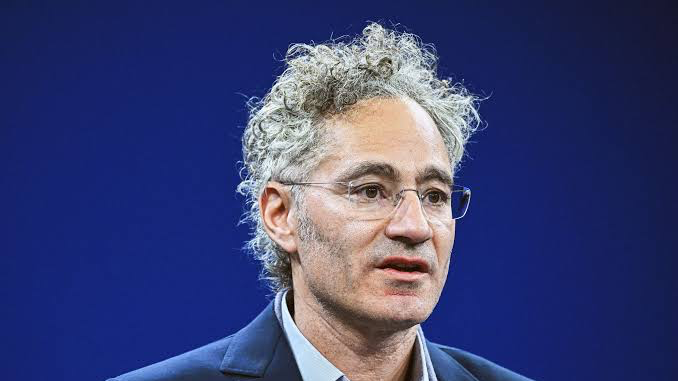
Speaking on CNBC's "Squawk on the Street" on September 17, 2026, Karp argued for a specific and fairly narrow position: "You have to find a way to set reasonable guidelines that are enforced, but you can't do it," he said, before landing on his actual mechanism, "The first line of defense is you're liable for your own actions." He went further, calling for both civil and criminal liability for people building technology capable of significantly disrupting society. Several outlets covering the same interview also reported Karp floating the idea that AI labs "have to be nationalized," reasoning that otherwise, in his words, "every single one of my clients is going to sue."
That combination is worth sitting with for a second, because it's internally in tension. Karp has spent much of 2026 positioning Palantir against what he calls Europe's overcautious, innovation-strangling approach to AI regulation, most visibly in the company's July 2026 "AI sovereignty" manifesto, which argued organizations should own their AI systems and infrastructure rather than cede control to third-party platforms, and in his continued promotion of the national-security framing from his 2025 book, "The Technological Republic." A CEO warning against European-style bureaucratic overreach in one breath and floating nationalization of AI labs in the next isn't necessarily a contradiction, Karp's actual argument is closer to "liability should replace bureaucracy, and if companies won't accept liability, government ownership is the alternative," but it's a considerably more radical position than the softer "reasonable guidelines" headline most coverage led with. Worth knowing which version you're actually planning around before you build a compliance strategy off a single quote pulled out of a nine-minute interview.
What's not in dispute across every outlet that covered it: Karp wants accountability to sit with a specific, identifiable party rather than being satisfied by a company publishing responsible-AI principles and standing up an internal ethics board, the model most companies currently use.
There's a useful historical parallel buried in how Karp frames the mechanism itself. "The first line of defense is you're liable for your own actions" is, functionally, product-liability law applied to software that until very recently was treated as exempt from that framing, largely on the theory that software is a tool and the human operating it bears responsibility for outcomes. Agentic and autonomous AI systems break that assumption, because the system is now making or heavily influencing the decision rather than simply executing one a human specified. Karp's position amounts to saying the legal framework needs to catch up to that shift specifically through liability exposure, not through a new licensing regime or a government AI safety board, which is a meaningfully different policy instrument than what's being debated in Washington and Brussels right now, and one that shifts risk directly onto corporate balance sheets rather than onto a regulator's enforcement calendar.
Why liability-first regulation changes the game differently than checklist-style compliance
Most AI governance conversations over the past two years have centered on documentation: publish your principles, run your internal reviews, produce your model cards, check your boxes. Karp's framing is a different animal entirely. It doesn't ask "did you document your process." It asks "who is legally exposed when this goes wrong, and can that exposure actually be enforced against them." That distinction matters enormously for how a company should be spending its risk-management budget in the next twelve months, because a checklist-compliant company and a liability-protected company are not the same thing, and the gap between them is exactly where lawsuits and regulatory penalties tend to land.
The industry's current default, publish principles, staff an ethics board, and hope internal review catches problems before they become incidents, was built for an environment where regulators mostly wanted evidence of good-faith effort. A liability-first environment cares less about good faith and more about a specific, answerable question: when the automated decision went wrong, who owned it, and can that ownership be proven in a courtroom or an audit. Analysts covering the CNBC interview noted that procurement officers in healthcare, finance, and defense are already behaving as if this shift is underway, rewriting vendor indemnity clauses and demanding proof of rigorous change-management protocols before signing enterprise contracts, rather than accepting a vendor's responsible-AI marketing page as sufficient assurance.
Liability-first vs. checklist compliance vs. self-policing, compared
Model | What it requires | Where the exposure sits | How it's tested |
Self-policing (2023-2025 default) | Published AI principles, internal ethics board, voluntary review | Diffuse, rarely attaches to a specific person or system | Reputational, only surfaces after a public failure |
Checklist compliance (EU AI Act model) | Documented risk classification, human-oversight design, conformity assessment before deployment | Attaches to the deploying organization as a regulatory obligation | Audited against a fixed standard, pass/fail |
Liability-first (Karp's framing) | Specific, identifiable accountability for builders and deployers, enforced through civil or criminal consequences, not just documentation | Attaches to individuals and companies directly, follows the money and the decision-maker | Tested in court or through contract indemnity, not a pre-set checklist |
The practical takeaway from that table: a company that's only built for the middle column, EU-style checklist compliance, isn't automatically protected in a liability-first environment. Checklist compliance proves you followed a process. Liability-first accountability requires you to prove who specifically was responsible for a given decision and that they had the authority and information to make it correctly, a considerably higher and more specific bar, and one your enterprise risk management software either already tracks or doesn't.
Why your enterprise risk management software needs an AI liability module now
Most enterprise risk management systems were built and configured before generative and agentic AI became embedded in day-to-day operations, which means most of them are structurally blind to the specific liability question Karp's framing puts on the table. A traditional ERM platform tracks financial risk, operational risk, and compliance risk against known regulatory frameworks. It generally doesn't have a field for "which AI system made or influenced this decision" or "which named human was accountable for approving the AI's recommendation before it took effect."
That gap is becoming the actual product category. Enterprise risk management solutions built or upgraded for the AI era need to answer four questions your current system probably can't answer today without a manual investigation:
Which decisions in this quarter involved an AI system's recommendation or action, and at what stage of the decision? Most companies can't produce this list on demand; it lives scattered across product logs, not a risk register.
Who was the accountable human for each of those decisions, and did they have the authority to override the AI's output? This is the specific gap Karp's liability framing targets, and it's also the same gap OpenAI's own policy team flagged in its August 2026 essay on AI-enabled power concentration, discussed in our earlier piece on OpenAI's traceability principle.
What's the documented chain of responsibility between your company and any third-party AI vendor whose model influenced the decision? This is exactly the indemnity language procurement teams are now rewriting, and it needs to live in your risk register, not just your legal department's contract files.
Can you reconstruct all of the above six months later if a regulator, auditor, or plaintiff's attorney asks? An enterprise risk management system that can't retrieve this on demand isn't meaningfully different, from a legal-exposure standpoint, from not having one at all.
An enterprise risk management system that answers those four questions isn't a hypothetical upgrade. It's the practical, non-ideological version of what Karp is describing when he says liability has to attach to a specific, identifiable party. Whether or not you find his broader regulatory politics persuasive, the operational requirement underneath it, a risk system that can name who was accountable for an AI-influenced decision, is the same one showing up in EU AI Act human-oversight audits, in enterprise procurement due diligence, and now in a major AI vendor's own CEO publicly describing it as the coming standard.
Where the real exposure sits: the data and storage layer beneath your AI
There's a layer of this problem that gets skipped in most coverage of Karp's comments, and it's the layer most directly tied to where AI incidents actually originate: the data storage and access-control infrastructure underneath the model, not the model itself. An AI system's recommendation is only as defensible as the data it was trained or run on, and a striking share of AI-related incidents trace back not to a flawed model but to a misconfigured storage bucket, an over-permissioned access policy, or data that shouldn't have been reachable by the system in the first place.
This is where enterprise risk management stops being an abstract governance exercise and becomes a concrete infrastructure audit. Storage security misconfigurations, publicly exposed AWS S3 buckets, overly permissive OneDrive sharing settings, cloud storage that isn't actually HIPAA compliant despite being marketed that way, are consistently among the most common root causes cited in cloud security incident reports, and they're exactly the kind of failure that becomes personally attributable once liability shifts from "the company had an AI ethics policy" to "a specific configuration decision exposed the data that led to the harmful output." If your AI system pulled from a data store that wasn't properly access-controlled, the liability chain Karp is describing runs directly through whoever owned that storage security decision, which in most companies is an infrastructure or IT team that has never been asked to think of itself as an AI liability control point.
Practically, that means your enterprise risk management system needs to track storage security posture as an AI liability input, not a separate IT hygiene item: which cloud storage systems feed which AI workflows, whether that storage meets the compliance standard the business claims (HIPAA compliant cloud storage isn't a label you can self-certify without an actual audit trail behind it), and who's accountable for access-control changes to that storage over time. This is the unglamorous, infrastructure-level version of the liability question Karp is describing on cable news, and it's the version most companies are least prepared to answer.
What this looks like when a company actually runs the audit
The pattern that shows up almost every time a mid-sized company runs this kind of AI-liability audit for the first time is remarkably consistent, and it's worth walking through because it's rarely the AI model itself that turns out to be the weak point. A typical audit starts with the risk register, which usually has zero entries tagged as "AI-influenced," not because no AI-influenced decisions happened, but because nobody built a field to capture them. The next step is pulling the actual workflow logs from customer support, security alerting, or procurement tools, and finding that a meaningful share of "automated" decisions were in fact AI-assisted, an AI classifier scored a ticket as low-priority, a fraud model auto-approved a transaction under a threshold, a security tool auto-suppressed an alert, without any of those actions being logged as AI-influenced in the company's own risk tracking.
The third step, and the one that most consistently produces the uncomfortable finding, is tracing the data these systems actually touched. It's common to find at least one AI-connected workflow reading from a storage location with broader access permissions than the workflow needed, a shared drive, a cloud bucket, or a database with stale access-control rules left over from a previous project. None of that is exotic or unusual; it's the accumulated residue of normal software growth. But under a liability-first standard, that residue stops being a background IT-hygiene item and becomes the specific, traceable point where an AI-influenced decision touched data it shouldn't have had unrestricted access to, which is exactly the kind of finding a plaintiff's attorney or regulator would go looking for after an incident, not before one.
The fix, in every case, ends up being less about the AI system and more about closing that gap between what the risk register assumes is happening and what the infrastructure logs actually show. That's a smaller, cheaper project than most companies expect once they see the specific gap, but it's a project almost no company runs voluntarily before something forces the question, which is precisely the incentive problem Karp's liability argument is trying to correct at the policy level.
Implementation considerations for updating your ERM system this quarter
Add an AI-decision field to your existing risk register before buying new software. Most enterprise risk management systems can be extended to tag which decisions involved AI without a full platform replacement; start there before evaluating a new enterprise risk management solution from scratch.
Name an accountable human for every AI-influenced workflow that touches a consequential decision. This is the single fastest way to close the gap Karp's liability framing exposes, and it costs nothing beyond the internal decision to assign the role.
Audit the storage layer feeding your AI systems, not just the AI systems themselves. Check storage security configurations, access permissions, and compliance claims (HIPAA compliant cloud storage, in particular) against what's actually enforced, not what's stated in a vendor's marketing material.
Rewrite vendor indemnity language before your next AI procurement cycle, not after an incident. If your current contracts with AI vendors don't specify who's liable when the vendor's model produces a harmful output, you're negotiating from a weaker position than the procurement teams already adjusting to this shift.
Build a six-month retrieval test into your risk management process. Pick a real AI-influenced decision from earlier this year and try to reconstruct, in writing, who was accountable and what data fed it. If you can't, your enterprise risk management system has a gap that needs fixing before a regulator or plaintiff's attorney finds it for you.
Frequently asked questions
Is Karp actually calling for new AI regulation, or arguing against it? Neither cleanly. He's arguing against bureaucratic, checklist-style regulation modeled on the EU's approach, while simultaneously arguing for enforceable personal and corporate liability, which is itself a form of regulation, just one enforced through courts and contracts rather than a regulatory agency's approval process.
Did Karp really call for nationalizing AI labs? Multiple outlets covering the same September 17, 2026 CNBC interview reported this, quoting Karp saying AI businesses "have to be nationalized" because otherwise his clients would sue them. It's a notable claim given Karp's broader anti-bureaucracy positioning, and it wasn't the headline most coverage led with, so it's worth confirming against the original CNBC segment if it materially affects how you plan around his position.
How is this different from the EU AI Act's human-oversight requirements we've covered before? The EU AI Act requires documented human oversight as part of a conformity assessment process, a checklist model. Karp's framing is liability-first: it doesn't ask whether you documented oversight, it asks whether a specific, identifiable person or company can be held accountable in court when something goes wrong. A company can pass an EU AI Act audit and still be exposed under a liability-first standard if it can't name who was responsible for a given decision.
Does this actually require new enterprise risk management software, or can we extend what we have? For most companies, extending existing enterprise risk management systems with an AI-decision tracking field and clear accountability assignment covers the immediate gap. A full platform replacement becomes worth evaluating specifically when your current system can't retrieve AI-decision accountability records on demand, which is the test that actually matters here.
What's the connection between storage security and AI liability? A large share of AI-related incidents originate in the data layer, not the model, misconfigured storage, over-permissioned access, or data that shouldn't have fed the system in the first place. Under a liability-first standard, whoever owned that storage security decision becomes part of the accountability chain, which means storage security has to be tracked as an AI risk input, not treated as a separate IT concern.
Not sure whether your current enterprise risk management system could actually answer "who was accountable for this AI-influenced decision" if asked?
Our AI governance and compliance review audits your existing risk management setup against exactly this standard, mapping AI-influenced decisions, accountable owners, and the storage security posture underneath them, so you have an answer before a regulator, auditor, or plaintiff's attorney asks for one.


Comments