
How Enterprises Are Transforming with AI Tools in 2026 Case Studies and Insights

Artificial intelligence has moved beyond buzzwords to become a core part of how enterprises operate in 2026. Companies across industries are using AI tools to improve productivity, make smarter decisions, and enhance customer experiences. This post explores real-world examples of AI adoption, highlighting specific applications, benefits, and challenges faced by organizations today.
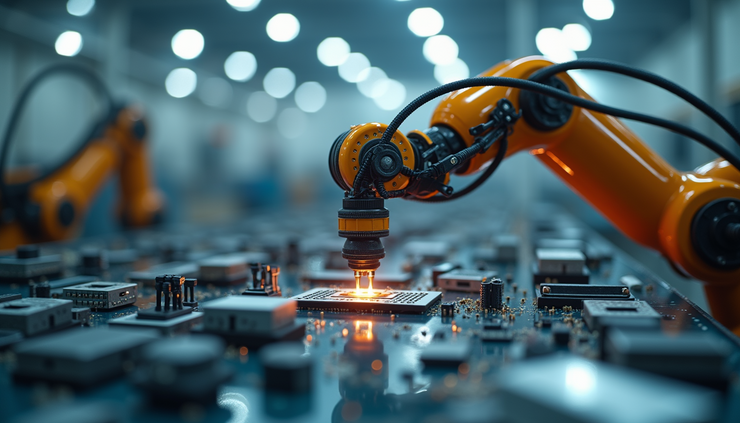
AI in Manufacturing: Boosting Efficiency and Quality
Manufacturers have embraced AI to automate complex tasks and improve product quality. At a leading electronics manufacturer, AI-powered robots handle delicate assembly processes with precision that surpasses human capabilities. These robots use computer vision to detect defects in real time, reducing waste and rework by 30%.
Another example comes from an automotive plant where AI systems analyze sensor data from production lines to predict equipment failures before they happen. This predictive maintenance approach has cut downtime by 25%, saving millions annually.
Key benefits in manufacturing:
Increased production speed without sacrificing quality
Reduced operational costs through predictive maintenance
Enhanced safety by automating hazardous tasks
Challenges:
Integrating AI with legacy equipment and training staff to work alongside machines remain hurdles. Companies invest heavily in change management to ensure smooth transitions.
AI in Healthcare: Improving Diagnosis and Patient Care
Healthcare providers use AI tools to analyze medical images, assist in diagnostics, and personalize treatment plans. For instance, a hospital network employs AI algorithms to detect early signs of diseases like cancer from MRI scans. This has improved diagnostic accuracy by 15% and accelerated treatment initiation.
AI chatbots also support patient engagement by answering routine questions and scheduling appointments, freeing up staff for more critical tasks. Personalized AI-driven treatment recommendations based on patient data help doctors tailor therapies, improving outcomes.
Benefits in healthcare:
Faster, more accurate diagnoses
Better patient communication and support
Customized treatment plans based on data analysis
Challenges:
Data privacy and regulatory compliance are top concerns. Ensuring AI models are transparent and unbiased requires ongoing oversight.
AI in Retail: Enhancing Customer Experience and Inventory Management
Retailers use AI to understand customer preferences and optimize inventory. A global fashion brand uses AI to analyze purchase history and social media trends, enabling personalized product recommendations that increase sales by 20%.
In warehouses, AI-powered robots pick and pack orders with high accuracy, speeding up delivery times. AI also forecasts demand more precisely, reducing overstock and stockouts.
Benefits in retail:
Personalized shopping experiences
Faster order fulfillment
Smarter inventory management
Challenges:
Balancing automation with human touch in customer service is critical. Retailers must also handle large volumes of data securely.
AI in Finance: Supporting Smarter Decisions and Fraud Detection
Financial institutions apply AI to detect fraud, assess credit risk, and automate routine tasks. One bank uses AI models to analyze transaction patterns and flag suspicious activity instantly, reducing fraud losses by 40%.
AI also helps loan officers by providing data-driven creditworthiness assessments, speeding up approvals while maintaining accuracy. Automated chatbots handle customer inquiries 24/7, improving service availability.
Benefits in finance:
Enhanced fraud detection
Faster, data-backed lending decisions
Improved customer support
Challenges:
Financial AI systems must comply with strict regulations and avoid biases that could affect fairness.
Impact of AI on Productivity, Decision-Making, and Customer Experience
Across industries, AI tools have led to measurable improvements:
Productivity: Automation of repetitive tasks frees employees to focus on higher-value work. Predictive analytics help avoid costly downtime or inventory issues.
Decision-making: AI provides insights from vast data sets, enabling faster and more informed choices. This reduces risks and uncovers new opportunities.
Customer experience: Personalized recommendations, faster service, and proactive support increase satisfaction and loyalty.
Despite these gains, companies must address challenges like data quality, ethical use of AI, and workforce adaptation. Successful AI adoption requires clear strategies, ongoing training, and transparent communication.
Looking Ahead: The Future of AI in Enterprises
As AI technology advances, enterprises will find new ways to apply it. Emerging trends include:
Greater use of generative AI for content creation and design
AI-driven sustainability initiatives to reduce environmental impact
More seamless human-AI collaboration tools
Enterprises that invest thoughtfully in AI will gain competitive advantages and deliver better value to customers and employees alike.
AI is no longer optional but essential for businesses aiming to thrive in 2026 and beyond. The examples here show how real companies are already transforming their operations and outcomes with AI tools.


Comments